



How Current Global Conflicts Impact Lubricant Prices
Geopolitical tensions, such as the ongoing conflict in Iran, are creating significant challenges for the lubricants industry and its global partners. The region’s instability, particularly around the vital Strait of Hormuz, has disrupted the flow of crude oil and base oil supplies, key components in lubricant production.
These disruptions have led to heightened supply chain uncertainties, increased transportation costs, and volatile pricing in the market. Businesses that rely on lubricants are feeling the impact, as unpredictability in costs and availability creates added pressure to maintain operations and profitability.
We want to give you the complete picture of why these changes are happening. You deserve to understand the extraordinary global forces driving your operational costs. This guide explains the root causes of current supply constraints, how they specifically impact engine oils, and what we are doing to ensure your supply remains uninterrupted.
What is the Strait of Hormuz?
To understand the current state of the lubricants market, we must look at a critical geographic chokepoint: the Strait of Hormuz. This narrow waterway separates Iran from the Arabian Peninsula, connecting the Persian Gulf to the open ocean. Under normal conditions, roughly 20 million barrels of oil pass through this strait every single day. This represents an incredible 25% of the world’s entire seaborne oil trade. (Britannica)
Since early March 2026, the Strait has been effectively closed. Daily tanker transits have collapsed to a fraction of their normal volume. Gulf producing countries, unable to load their oil onto outbound tankers, have been forced to cut production entirely.
Is this truly an unprecedented time?
According to people who’ve spent their careers in this industry, it is. The lubricants industry has certainly navigated turbulence before—most notably in recent times during the COVID‑19 pandemic, when shutdowns and shipping delays created severe shortages of the chemical additives required to blend engine oils. But even then, the market still operated within familiar boundaries. Today, those norms have vanished. The industry used to provide manufacturers with advanced notice of cost increases. During this time, we are seeing cost increases weekly, most often with immediate effect. And instead of the incremental $0.75–$1.25 per gallon increases we have historically planned for, we are now seeing jumps of $4 or more on inputs.
Our internal experts with decades of experience are saying they have never seen market conditions like this—not during the Gulf War, not during past crude oil spikes, not even during the pandemic. The current geopolitical conflict has effectively removed critical raw materials from the global market, creating a level of disruption and volatility that is without modern precedent. Acknowledging that reality is essential, because the scale and speed of these changes are unlike anything our industry has had to absorb before.
Why Lubricants Take the Hardest Hit
You might wonder why a waterway closure halfway around the world affects the price of the oil you put in your vehicles and equipment. The answer comes down to how lubricants are made. Engine oil is not crude oil. It is a highly refined, downstream product made primarily from base oil. When crude supply tightens, refineries process less oil, and base oil production falls in lockstep.
What are Group III base oils?
Full synthetic lubricants rely heavily on Group III base oils. Group III base oils are made using higher pressure and heat than Group I and II, resulting in purer base oils that are preferred (or in some cases, non-negotiable) in many formulations for high-quality, synthetic lubricants. (Machinery Lubrication)
Right now, a massive portion of the world’s supply of Group III oil for full synthetics is completely halted. Furthermore, recent drone strikes on major production facilities in the Middle East mean that even if the conflict ended today, a significant portion of base oil supply would remain offline for months at minimum. This is exactly why full synthetic prices are rising much faster than conventional oils or synthetic blends.
Refiners Prioritize Fuel Over Base Oil
Conventional oil and synthetic blends are not immune to these challenges. These products typically use Group I or Group II base oils. Right now, the Middle East disruptions have triggered a worldwide shortage of diesel and jet fuel.
Refineries in the United States currently make significantly more money prioritizing diesel and jet fuel production over base oil production. For refiners to switch their operations and make more base oil, the market price of base oil has to rise to make it worth their while.
Additionally, global refiners are facing immense pressure from international markets. As regions like Asia and Europe quickly run out of oil supply due to the Strait closure, their desperation grows. European vehicles require incredibly strict lubricant formulations, leaving them with very few options to pivot to alternative base oils. As European and Asian markets offer to pay premium rates to secure whatever oil is available, suppliers raise their prices across the board. North American lubricant manufacturers must pay these elevated prices simply to keep the materials flowing into the country.
The Ripple Effect on Additives and Distribution
The challenges do not stop at base oils. The chemical additives that give your lubricants their specific performance properties come from the exact same disrupted petrochemical supply chains. As crude oil flow constricts, additive costs surge in parallel with base oil costs.
Beyond the raw materials, this conflict impacts everyday logistics. We have all seen the effect this disruption has had on standard fuel prices at the pump. Higher fuel prices dramatically increase the cost to move goods around the country. This drives up the broader industry costs related to packaging, warehousing, and distributing our products to your doors.
What This Means for Lubricant Pricing & Possible Alternatives
Every major brand supplier in our portfolio — across base oils and additives — has issued at least one cost increase to us in April 2026. These are not modest adjustments, either. Industry sources confirm that major suppliers including ExxonMobil, Shell (SOPUS), Chevron, Phillips 66, Castrol, Valvoline, TotalEnergies, and others have implemented increases in this period alone. (clipperoil.com)
As these challenges unfold, it’s essential to know that U.S. Lubricants continues to stand strong for our customers. We are not only adapting to global pressures—we are leveraging our expertise and partnerships so we can continue to provide fluid solutions that meet your needs.
What can you do to ensure supply & how can U.S. Lubricants help?
As a business owner, you’re likely thinking about how to help ensure supply continuity for your shop or fleet. One important consideration is whether you currently use dexos®‑certified products. Dexos‑approved oils are specified for many General Motors (GM) vehicles and are designed to support engine performance, efficiency, and durability in accordance with GM requirements.
Dexos‑certified oils undergo extensive testing and approval processes to meet GM’s defined performance and quality standards. For vehicles that require dexos approval, using a licensed dexos® product remains essential to meet those specifications.
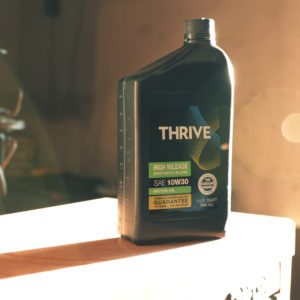
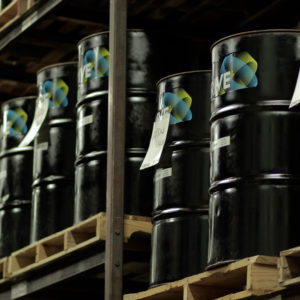
For vehicles and equipment that do not require OEM‑specific approvals, THRIVE® Full Synthetic Engine Oils offer a high‑quality alternative. These formulations are designed to meet or exceed leading industry standards, including ILSAC GF‑7 and API SQ, delivering strong protection against wear, sludge, and deposits while supporting engine cleanliness and performance.
THRIVE Full Synthetic Engine Oils are manufactured with high‑quality base oils and advanced additive technology, providing consistent performance aligned with modern engine requirements. This makes them a reliable option for a wide range of applications where dexos certification is not required.
Regardless of which products you choose to purchase or stock, U.S. Lubricants remains committed to supporting your business with dependable supply, transparent communication, and high‑quality solutions. If you have questions about selecting the right oil for your vehicles or equipment, our team is here to help.
Maintaining supply through strategic growth
While pricing remains volatile, your access to critical products does not have to be. We take our responsibility to your business seriously, and we are well-positioned to maintain your supply through this crisis.
We have grown over recent years which helped enable us to secure higher contracted volume with base oil and additive suppliers. In addition, our recent acquisition of contract manufacturer Pack Logix has suppliers wanting to partner with us because they’re betting on us to keep growing in the future. That means we are very confident that our pipeline can keep flowing through this crisis, but we are still subject to the market prices just like everyone else.
Navigating the Market Together
We do not take these market shifts lightly, nor do we underestimate what cost increases mean for your bottom line. We are doing everything in our power to move quickly, communicate clearly, and give you as much advance notice as possible so you can plan your operations effectively. Your business needs a reliable partner now more than ever, and we are committed to helping you weather this conflict.
If you have any questions about how these global shifts affect your specific product needs or pricing, please do not hesitate to reach out. Contact your U.S. Lubricants representative today with any questions. And if you don’t currently buy from U.S. Lubricants, but you want to explore what we have to offer, fill out our Contact Us form!