



A Gen Z’s Take on the 1980s
Recently, we came across a relic from our company’s history: a simple “Important Message” note dated June 1984. It was a pre-printed slip used for jotting down phone messages, a staple in offices before email and instant messaging took over.
Seeing this piece of paper made me reflect on how much the world has changed. As an early Gen Z-er (born in 2001), I’ve grown up in a world shaped by the internet, smartphones, and instant global connections. Notes like this feel both familiar and ancient—I hadn’t seen one in years, probably not since elementary school. Before I got my first smart device in 2012, communication and entertainment for me was all about landlines, spending time outdoors, or playing on the Nintendo Wii. It’s fascinating to think about how far we’ve come.
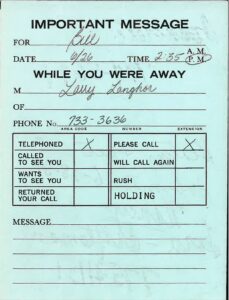
U.S. Lubricants, June 16th 1984
For U.S. Lubricants’ 50th anniversary and as a part of our commitment to serving the automotive and industrial lubricants needs of customers across the United States, let’s take a journey back in time. We’ll explore the radical shifts in how we communicate and how our industry—automotive and machine lubricants—has evolved right alongside technology.
From Message Slips to Instant Messages
In 1980, communication was deliberate, hair was big, and shoulder pads were bigger. If you needed to reach someone at work, you picked up a landline phone. If they weren’t there, a colleague would grab a pen and a message slip, noting the caller’s name, number, and a brief summary. The recipient would see it upon returning to their desk. There was a built-in delay. An “urgent” message meant waiting for a callback, not seeing three dots appear in a chat window.
Compare that to today. We have email, Slack, Microsoft Teams, text messages, video calls, and social media DMs—we can even pass along feelings and messages through GIFs. Digital communication is instantaneous, constant, and accessible from anywhere. A message that once took hours to be delivered and returned can now be handled in seconds from a device that fits in our pocket. This shift has reshaped expectations for speed and efficiency in every part of our lives, including how businesses operate.
The 1984 message slip was a tool for its time—reliable and functional. But today, our online communication tools enable collaboration and customer service at a scale that was once unimaginable. We can troubleshoot a client’s issue over a video call, send technical data sheets in an instant, and connect with partners on the other side of the world as if they were in the next room. The core need—to communicate effectively—remains, but the methods have been completely reinvented.
Looking for some more insights into the industry? Check out the U.S. Lubricants blog page for related insights
The Evolution of Lubricant Technology
Just as communication has been transformed by technology, so has the world of automotive and machine lubricants. The cars and machines of 1980 were marvels of their era, but they were fundamentally different from the high-performance, precision-engineered equipment we rely on today. This evolution demanded a parallel revolution in the fluids that keep them running.
The Automotive Shift: From Carburetors to Computers
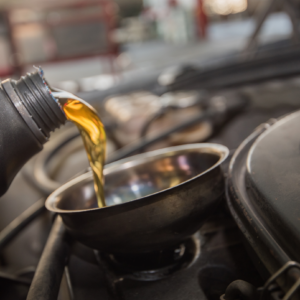
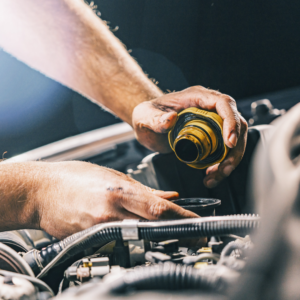
In the early 1980s, the average family car was a different beast. Engines were simpler, but also less efficient and produced higher emissions. Motor oils were formulated to meet the needs of these less demanding systems. Oil change intervals were shorter, often recommended every 3,000 miles, and the oils themselves were primarily conventional, mineral-based products.
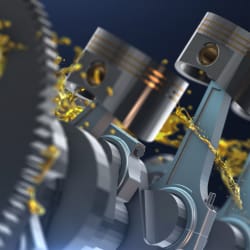
Then came a wave of innovation. Electronic fuel injection replaced carburetors, leading to better fuel efficiency and lower emissions. Onboard computers became standard, monitoring and adjusting engine performance in real-time. Engine designs grew more complex and compact, with technologies like turbocharging becoming common to boost power while reducing engine size.
These advancements placed new, extreme demands on motor oil:
- Higher Temperatures: Smaller, more powerful engines run hotter, requiring oils that can resist thermal breakdown.
- Tighter Tolerances: Modern engines are built with incredible precision. Lubricants must be thin enough to flow quickly at startup but strong enough to protect components under intense pressure.
- Longer Drain Intervals: Thanks to superior engineering and advanced lubricants, many modern vehicles can go 7,500 miles or more between oil changes. Of course, always make sure you check your specific vehicle’s OEM maintenance schedules.
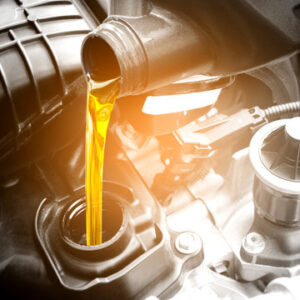
This pushed the industry toward synthetic lubricants. Synthetics offer superior performance, stability, and protection compared to their conventional counterparts. They are engineered at a molecular level to handle the heat, pressure, and extended service intervals of today’s engines, ensuring longevity and peak performance.
Want to find the right products for your vehicle? Discover our automotive lubricants solutions.
The Industrial Transformation: Power and Precision
The machinery that builds our world has also undergone a dramatic transformation. In 1980, industrial equipment was built for brute force. While effective, these machines were often less efficient and required more frequent maintenance. The lubricants they used were designed for durability under heavy, but relatively straightforward, operating conditions.
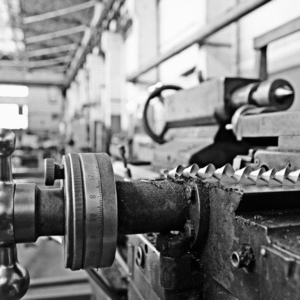
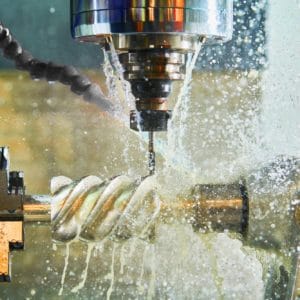
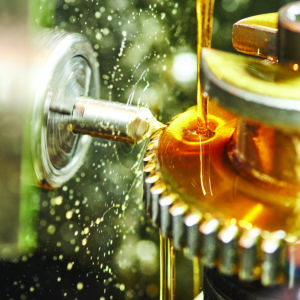
Today, automation and robotics define the factory floor. CNC (Computer Numerical Control) machines execute tasks with microscopic precision. Hydraulic systems operate under immense pressures, and high-speed manufacturing lines run 24/7. These modern industrial environments require specialized industrial lubricants that do more than just reduce friction.
Modern industrial lubricants must:
- Manage Extreme Temperatures: Protect equipment operating in both freezing cold and intense heat.
- Resist Contamination: Keep water, dirt, and other particles from damaging sensitive components.
- Extend Equipment Life: Advanced formulations reduce wear and tear, minimizing downtime and costly repairs.
- Improve Efficiency: Specialized hydraulic fluids and gear oils can improve energy efficiency, lowering operational costs.
From heavy duty lubricants for logging to fire-resistant hydraulic fluids for mining, the level of specialization in the industrial lubricant market today is staggering. It reflects an industry that has moved from providing a basic commodity to engineering highly specific solutions for complex problems.
Why THRIVE® Products Are the Future
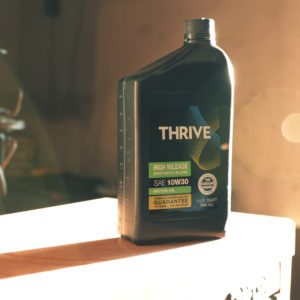
And that’s where THRIVE® by U.S. Lubricants steps in. THRIVE isn’t just any lineup—it’s a toolkit built for the challenges of the future, not the past. Whether you’re talking automotive dealerships, quick lubes, farming, mining, railroads, or the precision demands of modern manufacturing, THRIVE covers all the bases.
These products aren’t just there for your daily commute—they’re designed to help businesses and equipment operators go farther, last longer, and perform better, with your bottom line in mind.
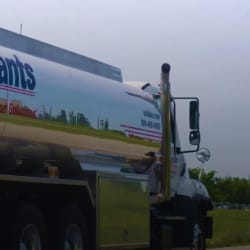
THRIVE blends cut through the noise by meeting the demanding specs for both today’s—and tomorrow’s—engines and machines. From heavy-duty trucks rolling cross-country to CNC machines working round-the-clock on the factory floor, THRIVE lubricants keep things moving, efficient, and protected.
So, if you’re looking at what the next 50 years hold, THRIVE is leading the way, blending innovation with proven performance. That’s the future we’re betting on—one where your lubricants do more, so your world keeps moving.
If THRIVE isn’t the solution, we have several major brand partners and will work to find the right products for you.
Get details on our THRIVE solutions right here: THRIVE Lubricants.
Connecting the Past to the Future
That old paper message slip from 1984 is more than just a nostalgic artifact. It’s a symbol of a starting point. It reminds us that progress is a continuous journey. The principles of 1980—clear communication and reliable machinery—are still at the heart of what we do. But the tools and technologies we use to achieve them have evolved beyond what anyone could have imagined back then.
As we celebrate 50 years serving customers from various regions of the U.S., we’re proud to support local businesses, fleets, and manufacturers with quality lubrication solutions tailored for your region and needs. The next generation of vehicles, whether electric or powered by advanced internal combustion engines, will require new fluid solutions. The continued rise of automation will demand even more specialized industrial fluids.
Just as the message slip gave way to the instant message, today’s technology will be the foundation for tomorrow’s innovations. And we’ll be here, ready to engineer the solutions that keep the world moving forward.
Looking for a trusted lubricant supplier in your area? Find a U.S. Lubricants location near you.